


Brewno
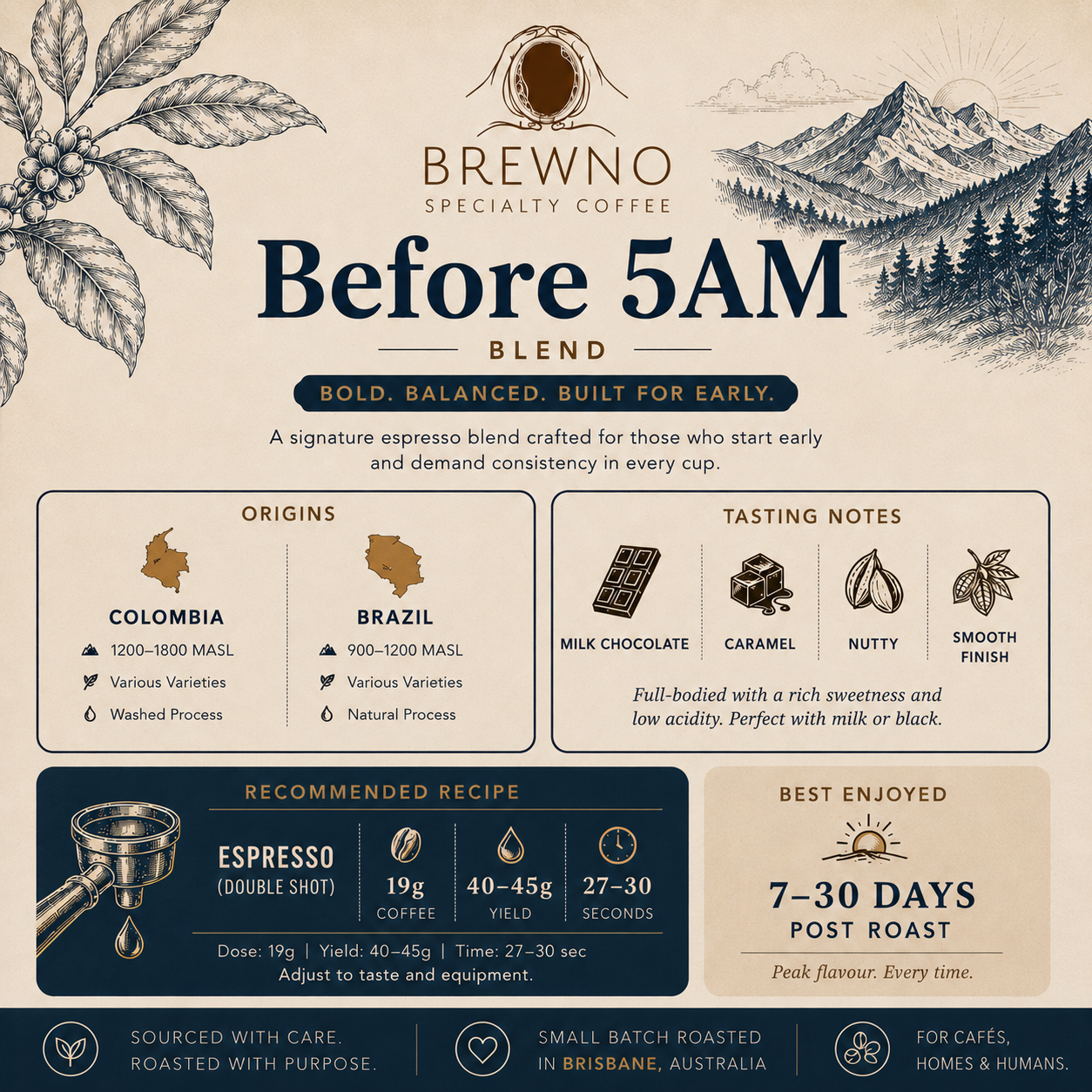
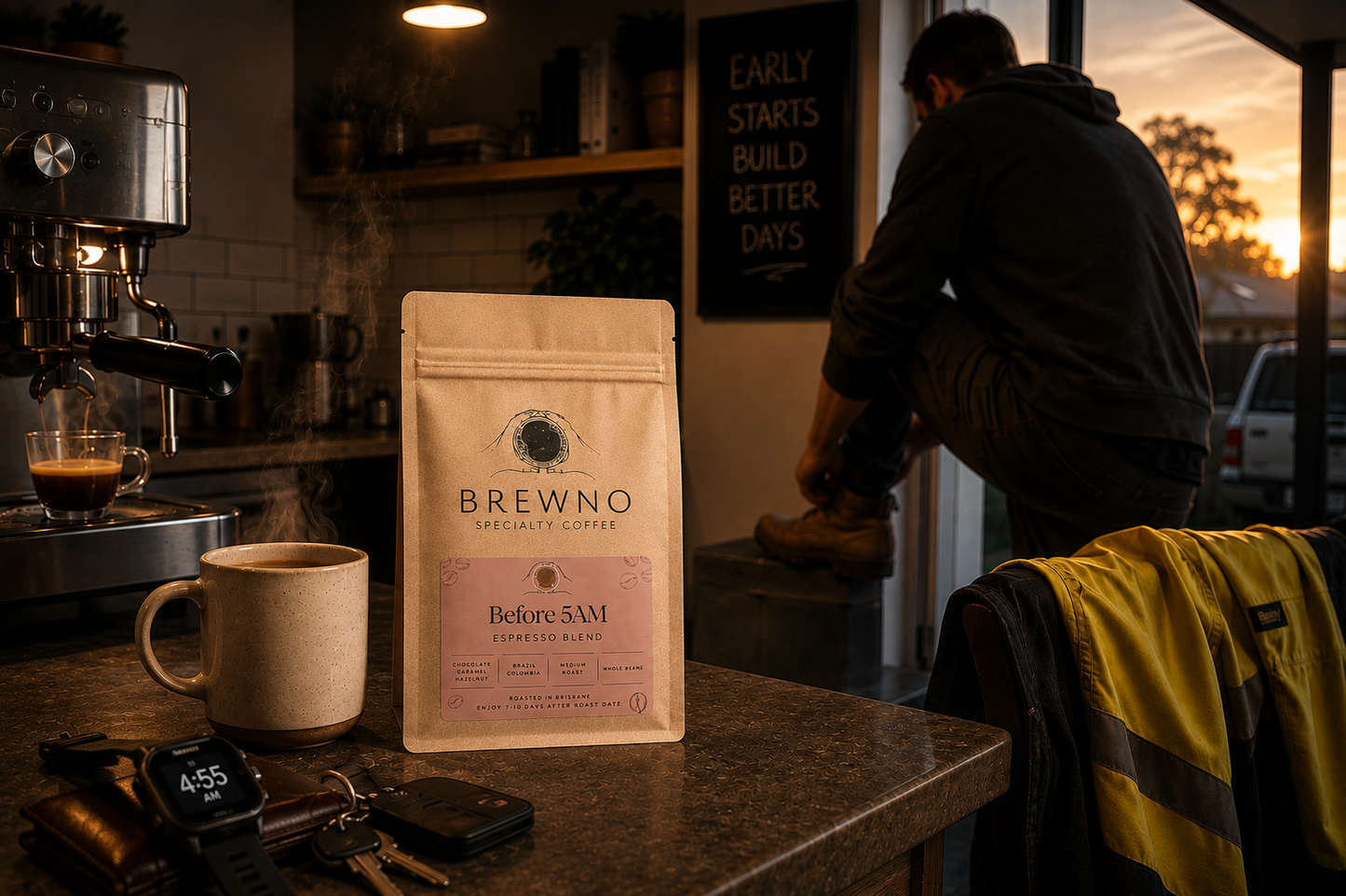
Before 5AM Espresso Blend | Fresh Roasted Espresso Coffee Beans

Why Choose Brazilian Coffee?
-

Largest Coffee Producer in the World
Brazil has held the title of the world’s largest coffee producer for more than 150 years, and today it still accounts for roughly one-third of global coffee supply. This scale isn’t just about quantity; it also reflects an unparalleled diversity of coffee-growing regions. From Minas Gerais with its high-altitude farms, to São Paulo’s historic plantations, to Bahia’s modern, irrigated estates, Brazil offers a huge range of flavours and qualities. The infrastructure, experience, and tradition developed over centuries mean Brazilian coffee is consistent and reliable. When you buy Brazilian beans, you’re getting coffee from a country that has perfected the art and science of large-scale specialty production while still maintaining a connection to its roots. That’s why Brazil is often the backbone of blends worldwide and remains a go-to for both roasters and everyday drinkers.
-

Distinctive Flavour Profile
Brazilian coffee is loved worldwide because of its approachable and versatile flavour profile. Known for its smooth body, low acidity, and naturally sweet notes, it delivers a cup that’s comforting and crowd-pleasing. The most common tasting notes include chocolate, nuts, caramel, and toffee; flavours that shine on their own and also blend seamlessly with milk. This makes Brazilian beans a favourite for espresso-based drinks like lattes, flat whites, and cappuccinos. But their versatility doesn’t stop there; as filter brews or pour overs, Brazilian coffees offer clean, sweet, and balanced cups that are easy to enjoy daily. Unlike origins that lean heavily on bright acidity or fruit-forward complexity, Brazil strikes a balance, making its coffees highly adaptable. Whether you’re a specialty enthusiast or simply someone who enjoys a reliable cup, Brazilian coffee consistently delivers comfort and flavour.
-

Tradition and Expertise
Coffee farming in Brazil is more than an industry; it’s part of the country’s cultural identity. With generations of farmers dedicated to the craft, knowledge about cultivation, harvesting, and processing has been passed down and refined over centuries. Brazilian producers are also known for their innovative approaches, from pioneering large-scale dry (natural) processing to adopting modern techniques that improve quality and sustainability. Farms range from small family-run plots to large estates, but what unites them is a focus on producing beans that meet the world’s demand for quality and consistency. With ideal conditions; volcanic soils, varied altitudes, and predictable seasons; Brazil has the natural resources to back up its expertise. This combination of tradition, innovation, and scale means Brazilian coffee offers both history and progress in every cup. Choosing Brazil isn’t just about taste; it’s about connecting with a legacy of excellence.


Blog posts
View all-

How Much Coffee Does an Office Need? | Office C...
Not sure how much coffee your office actually needs each month? This simple guide breaks down how many coffees you can expect from 1kg of beans, how to estimate workplace...
How Much Coffee Does an Office Need? | Office C...
Not sure how much coffee your office actually needs each month? This simple guide breaks down how many coffees you can expect from 1kg of beans, how to estimate workplace...
-

Should Your Gym Sell Coffee? | Coffee for Gyms ...
Could coffee improve your gym's member experience while creating an additional revenue stream? We explore why more gyms, fitness studios and wellness spaces are adding quality coffee, what you need...
Should Your Gym Sell Coffee? | Coffee for Gyms ...
Could coffee improve your gym's member experience while creating an additional revenue stream? We explore why more gyms, fitness studios and wellness spaces are adding quality coffee, what you need...
-

Australian Grown Coffee | Can Coffee Be Grown i...
Can coffee really be grown in Australia? Discover where Australian coffee is produced, what it tastes like and why Australian-grown specialty coffee is one of the country's best-kept secrets.
Australian Grown Coffee | Can Coffee Be Grown i...
Can coffee really be grown in Australia? Discover where Australian coffee is produced, what it tastes like and why Australian-grown specialty coffee is one of the country's best-kept secrets.


FAQ
What makes coffee “specialty” instead of regular coffee?
Specialty coffee is graded 80+ on a 100-point scale by certified tasters. Unlike commodity coffee, which is grown and sold in bulk, specialty beans are carefully sourced, processed, and roasted to highlight their unique flavours. This results in a more complex, high-quality cup.
How long do coffee beans stay fresh after roasting?
Coffee is at its best within 2–4 weeks of roasting. After that, flavours begin to fade as beans lose their aromatic compounds. That’s why Brewno roasts to order; ensuring your beans arrive fresh, not stale from sitting on a supermarket shelf. for more detail see our blog on coffee freshness
Can I get specialty coffee delivered to regional areas in Australia?
Yes! Brewno delivers Australia-wide, from major cities like Sydney, Melbourne, and Brisbane to regional towns. No matter where you live, you can access freshly roasted specialty coffee delivered straight to your door.
Is specialty coffee worth the price?
Absolutely. Specialty coffee costs slightly more than supermarket coffee because farmers are paid fairly, beans are higher grade, and roasting is done in small batches. The payoff is a fresher, more ethical, and far better-tasting cup.
What is the difference between direct trade and Fair Trade coffee?
Fair Trade sets minimum price guarantees for farmers and supports community projects.
Direct trade builds one-to-one relationships between roasters and growers, often leading to higher pay and more transparency.
At Brewno, we support both, ensuring your coffee is ethical and traceable.
How do I store specialty coffee beans at home?
Keep beans in an airtight bag or container, stored in a cool, dark place. Avoid the fridge or freezer, as fluctuating temperatures and moisture can damage freshness.